Harriet Rossetto: Discovering the Second Half of Life
- At April 13, 2026
- By Jessica
- In Interests
 0
0
Published in D22 Connection, April 2026
The founder of a renowned recovery center reflects on identity, aging, and the unexpected wisdom found at the bridge table.
By Jessica Dee Rohm
Four afternoons a week, Harriet Rossetto takes her seat at a bridge table at the Duncan Bridge Center on Cook St. in Palm Desert across from her husband, Rabbi Mark Borovitz. The cards are ready, Bridgemates loaded with ACBL numbers, and the quiet murmur of bidding drifts across the room. Twenty-four boards await. Some days the cards cooperate. Other days they most certainly do not.
Like many bridge players, Harriet rides the familiar emotional roller coaster of the game—the thrill of a well-played hand, the frustration of a missed signal, the occasional raised eyebrow from a competitive opponent.
But for Harriet, bridge has become more than a pastime. It has become a quiet classroom for the second half of life. And the Duncan Bridge Center has become more than a place to play cards. It has become her community.
That realization might surprise those who know her from the remarkable first chapter of her career. For decades, Harriet Rossetto was known by a title that defined both her work and her identity: Founder.
A Calling That Changed Thousands of Lives
Harriet Rossetto received her Master’s degree in Social Work from the University of Minnesota and spent fifteen years working in the field before an unexpected opportunity altered the course of her life. One day she noticed a small advertisement seeking “a person of Jewish background and culture to help incarcerated Jewish offenders.”
Harriet answered the call.
Beginning in 1984, she entered a largely unspoken and uncomfortable arena—working with Jewish men and women in prison struggling with addiction and criminal behavior. At the time, there was widespread denial within the community that “nice Jewish men and women” could suffer from addiction or become involved in crime.
Harriet knew otherwise.
She also knew that simply incarcerating these individuals did little to heal them or protect society from repeated cycles of addiction and recidivism. Frustrated by the lack of meaningful resources to help people rebuild their lives after prison, she began to envision something radically different.
That vision became Beit T’Shuvah —“The House of Returns.”
A Pioneer in Recovery
Harriet believed that addiction was not simply a behavioral problem but a malady of the soul requiring spiritual healing. Guided by that conviction, she created the first residential recovery program in the country to integrate Judaism, the Alcoholics Anonymous Twelve Step program, and psychotherapy into a single treatment model.
What began as a bold experiment grew into a groundbreaking institution.
Over more than thirty-five years, Harriet built Beit T’Shuvah into a world-recognized recovery center, mentoring hundreds of therapists and counselors along the way. She supervised promising graduate students completing their clinical training for MFT and MSW degrees, helping shape the next generation of addiction professionals.
Her philosophy has always been simple and direct: “We are either in recovery or we are in denial.”
Under her leadership, Beit T’Shuvah became not just a treatment center but a community—one dedicated to helping people rediscover dignity, responsibility, and purpose.
Her work has earned national recognition. Harriet participated in President George W. Bush’s Faith and Recovery roundtables and received the Advocates for Action Award from President Barack Obama for her contributions to recovery and community healing.
For more than three decades, she served as the guiding spirit of Beit T’Shuvah, working side by side with her husband, Rabbi Mark Borovitz, whose own journey of recovery became central to the organization’s spiritual mission.
Together they have lived, worked, and built a life devoted to helping thousands of individuals and families find their way out of addiction.
From Role to Soul
After decades of leadership, Harriet eventually stepped away from the role that had defined so much of her life.
The transition was both abrupt and deeply personal. The nameplate on her office door came down. The parking space that had long been hers belonged to someone else. The healer who had guided so many through recovery now faced a question familiar to many people entering life’s later chapters: Who am I now?
Leaving behind a professional identity after decades of meaningful work can feel profoundly disorienting. The structure and recognition that once shaped daily life disappear, and the future can seem uncertain.
Harriet responded the way many lifelong learners do—she turned to books.
Determined not simply to grow older but to grow wiser, she began reading widely about aging, elderhood, and the search for meaning later in life. Soon her bookcase filled with titles exploring this new terrain. Today, two shelves are devoted to what she jokingly calls her “self-prescribed curriculum on aging.”
“What I discovered,” Harriet says, “is that aging wisely is something we have to study and practice—just like anything else.”
One of her most meaningful insights came from Connie Zweig’s book The Inner Work of Age. Its subtitle —“Shifting from Role to Soul”immediately resonated.
For much of our lives, identity is built around roles—parent, professional, leader, spouse. Success is measured by titles and accomplishments.
But the second half of life asks a different question.
Instead of asking “What have I achieved?” we begin asking “What truly gives my life meaning?”
“With time,” Harriet explains, “the question changes from “How do you see me?” to “How do I see myself?”
An Intellectual Nomad
During this period of reflection, a phrase shared by a writer friend struck Harriet with unusual clarity: intellectual nomad.
For much of her life she had felt like someone who wandered across disciplines and ideas without fitting neatly into any single category. The phrase reframed that experience as a strength rather than a limitation.
To Harriet, “intellectual nomad” describes a curious mind that moves freely across information landscapes, connecting ideas that might otherwise remain unrelated.
For the first time, she felt she had found language that truly captured her nature.
Lessons from the Bridge Table
Perhaps the most surprising classroom for Harriet’s reflections has become the bridge table.
Four afternoons each week she and her husband sit down to play duplicate bridge. Like many players, they have experienced the full emotional range the game can bring. Some days they finish near the top of the field; other days they land firmly at the bottom.
“Bridge,” Harriet says with a smile, “has a way of exposing human nature in the bright fluorescent light of a community room—where triumph, frustration, and the occasional raised eyebrow all play out over thirteen cards.”
But bridge has a built-in lesson: once the game begins, you cannot simply walk away. “Bridge forces you to forgive yourself—and your partner,” she says. “You can’t storm off. You have to keep playing.”
In the bridge world, the ultimate goal is becoming a Life Master, earned through years of tournament play. Harriet has come to believe the deeper challenge lies elsewhere. Rather than mastering the game, she is more interested in mastering the emotions and reactions that the game, and life inevitably, bring.
A Different Kind of Mastery
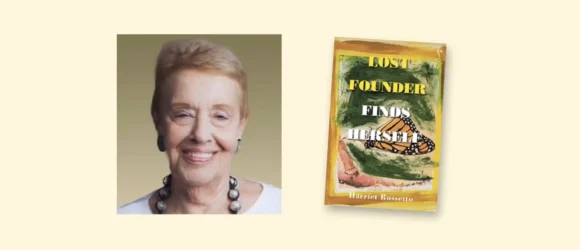
Today Harriet’s life has taken on a quieter rhythm. The urgency of her Founder years has given way to reflection, reading, writing, and exploration. She is the author of the memoir Sacred Housekeeping and continues to reflect on the lessons of recovery, leadership, and personal transformation. Her second book, Lost Founder Finds Herself, is available at Amazon.com.
The wilderness she entered after leaving her Founder identity, she has discovered, is not empty at all. It is a spacious landscape for wandering minds — a place where the healer and the wounded, the teacher and the student, the winner and the last-place bridge player can all coexist.
And so, four afternoons a week, Harriet Rossetto once again takes her seat at the bridge table. The cards are shuffled, the bidding begins, and another twenty-four boards lie ahead.
Some days she wins. Some days she does not. But these days, she knows that mastering the game was never really the point. Learning how to live the second half of life with curiosity, humility, and grace—that is the real mastery. ♣