Dennis Williams: From Tenor for the Metropolitan Opera to Ten+ Point Hands at the Bridge Table
- At September 15, 2026
- By Jessica
- In Interests
 0
0
Published in D22 Connection, September 2026
By Jessica Dee Rohm
Admit it….you’ve always wondered what opera and bridge have in common. Well, humorist Robert Benchley once quipped, “Opera is when a guy gets stabbed in the back and, instead of bleeding, he sings.”
Kind of like bridge, no?
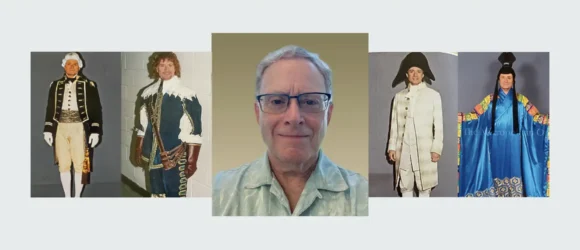
You never quite know whom you are going to meet across a bridge table. That’s part of the fun. The mild-mannered gentleman or mysterious lady studying his or her cards may be a retired surgeon, a rocket scientist, a former CEO or, in the case of Dennis Williams, a man who spent 25 years singing on one of the most famous opera stages in the world.
Dennis Williams, a regular at Redwood Bridge Club in San Diego’s Balboa Park, was a tenor with the Metropolitan Opera in New York City from 1986 until 2011, a quarter century during which he performed in hundreds of productions and shared the stage with many of the greatest opera singers of his generation.
Not bad for the fellow who may now be sitting across from you contemplating whether to finesse the queen on the right rather than sing to the Queen of the Night.
Dennis was a member of the Met’s full-time chorus, which is rather like saying someone played baseball for the Yankees without mentioning that he had to be awfully good at baseball to get there. This analogy is apropos as Dennis loves baseball and gardening almost as much as playing bridge.
Dennis also sang over 100 solo roles including Giuseppe in La Traviata and Parpignol in La Boheme. That’s one hundred solos, the opera equivalent of 100 home runs.
The Metropolitan Opera is one of the most prestigious opera companies in the world, and its chorus is made up of highly trained professional singers who must not only possess exceptional voices but also master an enormous and constantly changing repertoire.
During his years at the Met, Dennis sang in six languages and performed everything from the standard repertoire to less familiar works. Among the hundreds of performances in which he appeared were Verdi’s La Traviata and Puccini’s Turandot, operas whose melodies are familiar even to people who insist they know absolutely nothing about opera. In case you were puzzled by the Queen of the Night reference above, she is one of the most famous characters in Mozart’s most famous opera, The Magic Flute.
And unlike those of us who occasionally have difficulty remembering what was bid two minutes ago, Dennis had to remember music, words, blocking and stage direction, often in a foreign language, with an orchestra playing beneath him and several thousand people watching.
Perhaps bridge isn’t so intimidating after all.
“I always loved to sing. My favorite class in grade school was music when Sister Cecilia played the piano and we sang songs from the music book,” Dennis remembered. “One of my classmates asked ‘why do I have to sing so loud.’ It was then I realized I have a voice.”
Dennis’s musical education began long before he arrived at Lincoln Center. He earned a B.S. in Music Education from West Chester State College in Pennsylvania, followed by a Master of Music in Vocal Performance there. He later attended New York University, completing 30 credits toward a Ph.D. in Music Education.
Before joining the Metropolitan Opera, Dennis built an impressive résumé in New York and Philadelphia. He sang with the Gregg Smith Singers and Sine Nomine Singers in New York, as well as the After Dinner Opera Company. In Pennsylvania, he performed with the Pennsylvania Opera Festival, Pittsburgh Opera, Philadelphia Lyric Opera, and the Philadelphia Oratorio Choir.
Then, in August 1986, he joined the Metropolitan Opera.
For a professional singer, walking into the Met must have been a little like a baseball player walking onto the field at Yankee Stadium for the first time. This was the house of Caruso, Callas, Pavarotti, Leontyne Price, and Placido Domingo. Night after night, Dennis stood on that same stage.
And he stayed there for the next 25 years.
Eventually, however, the curtain came down on Dennis’s New York chapter. He left the Metropolitan Opera in July 2011 and moved to San Diego. Maybe those New York winters got to him.
But singers, apparently, don’t retire their voices quite as easily as the rest of us retire our briefcases.
Since arriving in California, Dennis has continued performing with the San Diego Opera Chorus, Musica Vitale and Genesis Opera Theater. His church work has included singing at Immaculata at the University of San Diego, where he has served as tenor section leader and cantor, and at All Saints Episcopal, where he has been a tenor soloist and section leader. Sister Cecilia would be proud.
Which brings us back to bridge.
There is something rather fitting about an opera singer becoming a bridge player. Both pursuits demand concentration, memory, discipline, timing and the ability to work in perfect harmony with other people. And, the link between math and foreign language ability is well known.
Of course, there is one important difference.
At the Metropolitan Opera, if Dennis made a dramatic gesture and raised his voice, the audience applauded. At the bridge table, director David Walters (from whom Dennis started taking lessons in 2022) might tell him to pipe down. The likelihood of this happening, of course, is next to nil as Dennis is one of the kindest and gentlest souls in the bridge world.
So, the next time you find yourself playing against Dennis Williams, remember that the quiet tenor on the other side of the table spent a quarter century under the lights of the Metropolitan Opera.
And if he happens to make a particularly beautiful bid or make slam, perhaps a discreet “Bravo!” would not be entirely out of order. ♣
Lucky Swarms – Kathleen Owen
- At July 09, 2026
- By Jessica
- In Interests
- 0
Published in D22 Connection, July 2026
“The bee is such a busy soul, She has no time for birth control.
That is why, in times like these, There are so many sons of bees.”
— Ogden Nash
By all appearances, Kathleen Owen seems perfectly suited to the orderly world of duplicate bridge. A retired insurance executive with a degree in accounting from USC, a CPA examination under her belt, multiple insurance licenses, and a career spent building and running successful companies, she understands systems, probabilities, and managing risk.
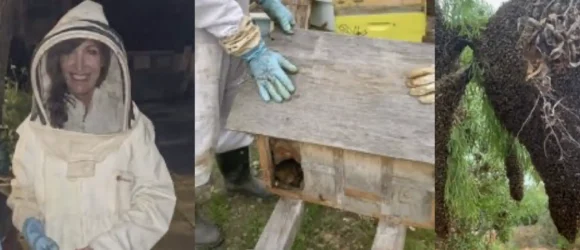
Which is perhaps why no one who knows her well is surprised that, during the uncertainty of Covid, Kathleen embraced an entirely new occupation. She became a beekeeper. Or perhaps more accurately, a bee rescuer.
A friend mentioned to Kathleen that she had purchased a beehive as a Father’s Day gift. Once the bees were installed, however, the recipient’s wife decided she preferred life without 50,000 buzzing roommates. Suddenly, the hive needed a new address.
Kathleen lived on a large lot in Rancho Santa Fe and had plenty of room, but she knew absolutely nothing about bees.
Fortunately, one of her neighbors maintained a large apiary and introduced her to Eric Robinson, a scientist by weekday and environmentalist and bee rescuer on weekends. Beekeeping ran in Eric’s family. Both grandfathers had been instrumental in the San Diego Beekeepers Society.
Soon Kathleen found herself dressed in borrowed protective gear, loading the hive into Eric’s car and transporting it to its new home.
That should have been the end of the story. Instead, it was only the beginning.
Before long, Kathleen had volunteered for Eric’s weekend rescue missions. Along with another helper named Dan Lanzer—a retired Navy Laboratory IT specialist and former Navy medic with a gift for ingenious bee-moving contraptions—she spent Saturdays and Sundays removing colonies from irrigation boxes, chicken coops, owl houses, fences, planters, birdhouses, shed floors, walls, attics, and trees so tall they seemed to touch the clouds.
Sometimes the calls took her to homes of people she recognized from the great Scott Farr’s Bridge By Farr bridge classes from before Covid interrupted normal life.
Who knew duplicate bridge and bee extraction occupied such neighboring circles?
Not all bees, Kathleen discovered, possess identical personalities. Some colonies were gentle and cooperative. Others, in Kathleen’s understated description, were “spicy.” Kind of like bridge players, no?
Researchers at UC San Diego estimate that many local feral bees are roughly sixty percent Africanized, making each rescue something of an adventure. Yet even the spicier bees deserved saving.
“My son likes to tease me because every time I walk up to a hive I say, ‘Hello, Ladies.’ When I’m relocating them, I encourage them to move into their new home, and if I accidentally squish one, I apologize. I know it sounds silly, but we’re kindred souls.”
Over time, Kathleen learned to listen to her new friends. “When the girls are happy, the hive has this lovely low hum. If they’re disturbed, the pitch and volume go way up. That’s when you know you need to proceed carefully.”
To manage transport, she and her partners use a few tricks. “We spray sugar water as a snack so they’ll stop and clean themselves, or we use smoke. Both delay the alarm pheromone. That pheromone smells exactly like banana Hawaiian Tropic sunscreen—and when you smell it, things are about to get spicy.”
Kathleen insists that calm matters. “It really helps to stay calm and grounded. And beekeeping with a buddy is always a good idea.”
Word spread through Rancho Santa Fe. Friends, desperate for outdoor activities during the isolation of Covid, became interested in hosting hives. Kathleen happily obliged. Soon she was supervising numerous colonies, while Eric and Dan oversaw others.
Then Spring brought honey season. After removing the honey ‘supers’ the upper boxes where the queen is forbidden to enter—the trio gathered for the sticky work of spinning honey. The result was gallons of raw, golden sweetness.
Some went to homeowners who hosted the hives. Much of the rest found its way into Mason jars and eventually supported Trojan League scholarships for San Diego students attending USC. Trojan League has awarded millions of dollars in scholarships over the past fifty years, making Kathleen’s bees surprisingly productive philanthropists.
As Covid alarm faded and life returned to normal, Kathleen reduced the number of hives under her care. Today she maintains only a few colonies, though her enthusiasm remains undiminished.
And what enthusiasm! She delights in sharing bee trivia. Such as:
- All worker bees are female.
- Throughout their six-week summer lives, they change careers several times. Some become nurses tending brood. Others are water collectors, water receivers, undertakers, guards, scouts, or foragers. The queen, meanwhile, may reign for two or three years.
- A healthy summer colony contains around 50,000 bees, all focused on one goal—survival.
- When the hive becomes crowded, they swarm.
Should you find yourself in the middle of one of these airborne migrations, Kathleen offers a curious piece of advice. Don’t panic. But hold your breath.
Guard bees instinctively target carbon dioxide, which evolved as a defense against predators such as bears and badgers. Fortunately, swarming bees are generally docile. Before leaving home, they gorge themselves on honey, filling a second stomach that later doubles as the same vessel water carriers use to cool the hive. “Nature,” Kathleen says, “is amazing.”
Her adventures have included one especially memorable car ride when a box of bees accidentally opened during transport. The solution? Turn up the air conditioning. Cold bees become sluggish. BRRZZZ. Problem solved.
There was another memorable Saturday that nearly turned serious. “We were on our third hive removal and it was hot. Between hives I had taken my hood off and forgot to zip it back up. The colony was aggressive. My suit was filling with bees and there was no way to take it off because we were surrounded by thousands of angry bees.”
Dan Lanzer sprang into action. “He pulled me away and said, ‘Close your eyes and hold your breath.’ Then he repeatedly filled my suit with smoke. I still got plenty of stings, but without Dan’s quick thinking it could have been much worse.”
Kathleen does receive her share of stings. Luckily, she’s not allergic, or she might break out in....hives! “I get stung through my gloves all the time. I wear thick rubber gloves because I need the dexterity. Besides, beekeepers don’t seem to get arthritis. Maybe it’s that peptide in bee venom.”
Looking back, it is hard to imagine that a woman who spent decades building workers’ compensation networks and leading insurance companies would eventually spend weekends coaxing bees out of chicken coops.
But bridge players know better than most that life often deals unexpected cards. Sometimes they lead to grand slams. Sometimes they sting. Sometimes they generate a lot of buzz. And sometimes they lead to 50,000 new friends.
Kathleen Owen has enjoyed all of the above.
And if you happen to receive a jar of honey from her, consider yourself very lucky indeed. Just remember that behind every spoonful stands an army of hardworking girls—and one bridge player who still greets them every morning with a cheerful, “Hello, Ladies.” ♣
The Luck of The Draw
- At June 28, 2026
- By Jessica
- In Interests
- 0
Published in D22 Connection, June 2026
Partners Then. Partners Now.
Call it fate. Call it the luck of the draw.
In duplicate bridge, we like to think we choose our partners—but sometimes, it seems, the cards were dealt long before we ever sat down at the table.
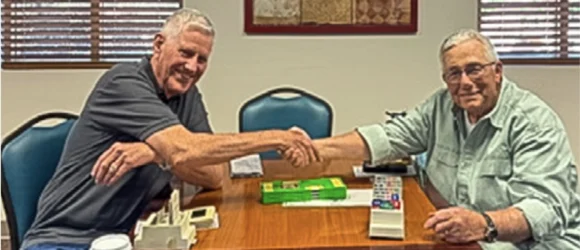
For the past eight years, Jim Malone and Dave Owens have been just that: partners. A steady pair. Familiar faces across the bridge table, exchanging the quiet language of bids and glances, triumphs and near-misses. To most at the club, theirs is simply a good match, nurtured by Joyce Potter, the partnership whisperer of the South Orange County Bridge Center in San Juan Capistrano.
Or perhaps, as some jokingly suggest, Joyce just liked the symmetry of a pair of “Jims.” (One, it turns out, is a nickname. You need to call him Dave.)
What no one at the club could have known in advance, not even, at first, the two Jims themselves, is that this partnership did not begin eight years ago. Its origins lie more than half a century earlier, in a place far removed from bidding boxes and scorecards.
Vietnam. Near Da Nang. 1968 to 1970. Marine squadrons H&MS 16 and Purple Fox Squadron - HMM 364.
They did not know each other then. Not really. Not beyond the anonymity of camouflage and the shared, unspoken understanding of young men sent into a war governed by forces far beyond their control. There were no leisurely conversations over beers, no easy camaraderie. Time there was measured differently: by missions, by moments, by survival.
J. “Dave” Owens remembers it now with the clarity, and the distance, of his eighty years. “Who is that man in the mirror?” he writes. “Some mornings, I recognize a familiar reflection; other mornings, I feel the need to reach out and shake a stranger’s hand.”
The years between then and now, he suggests, are both vivid and veiled—“hidden behind the trappings of camouflage… shrouded in an opaque haze.” And yet, the arc of his life stretches wide and full, a rearview mirror opening onto something unmistakable: a life well lived.
Before the war, there was another path entirely. A boy on the shores of Lake Carnegie, New Jersey. A student at Princeton. A future that pointed toward ministry, toward a life of study and contemplation.
“We must be willing to let go of the life we planned,” he reflects, “so we can live the life that is waiting for us.”
The awakening came abruptly—a letter from the Draft Board. A summons. A turning. What would a student of classical languages and theology know of war?
And yet, war became his calling, though not in the way first expected. The Army was not to be. Instead, Dave found himself drawn to the Marines, and to the cockpit. A Marine aviator. A different kind of ministry, perhaps; one measured in missions, in responsibility, in bringing men home alive.
He thought he might serve six years. Twenty-eight later, he was preparing to retire from a rewarding career with the Marine Corps.
His career would span two wars—Vietnam at the beginning, the Gulf War at the end—and more than 4,000 hours in the air, flying both rotor-wing and fixed-wing aircraft. In the cockpit, as young Marines boarded behind him, Dave would study their faces and offer a quiet prayer: Deliver us home in one piece.
From above, he watched the choreography of duty unfold. Behind him, a door gunner—Jim, or George, or Joe—stood ready at a .50 caliber machine gun, scanning the horizon.
Names were incidental. The mission was everything.
Jim Malone was one of those young Marines.
Unlike many young men of his generation, Jim did not wait to be drafted. While still in college, he volunteered for the Marine Corps. Rather than serving the minimum two years, he signed on for four, and then volunteered for Vietnam.
When his superiors discovered he could type, they assigned him to Group Headquarters (MAG 16) stationed at Marble Mountain, near Da Nang. But Jim wanted more than administrative duty.
“If I must be here,” he said, “I want to be proud of my contributions.” So, he volunteered again.
He stepped away from the relative safety of a desk and volunteered for any assignment that would get him off said desk: helicopter door gunner, retrieval of downed helicopters, scrounging for parts—literally ANYTHING.
And, without knowing it, the partnership of Jim and Dave began.
Fast forward nearly fifty years.
Now they sit across from one another at a bridge table, partners in a very different kind of game. The stakes are lower, the risks mercifully contained to overtricks and underbids. And yet, something of that earlier trust remains—the instinctive reliance, the quiet understanding that your partner will do his job.
They introduce themselves, as bridge players do. Jim will mention his years in the Marine Corps with characteristic understatement. Dave’s 28 years in uniform earn him quiet respect, though he often defers to another club member, Jack Rippy, whose three decades of service place him just ahead in the informal hierarchy of Marines.
But both men carried their discipline and curiosity into remarkably full lives after the war.
When Jim returned home, he resumed his studies at UCLA, initially immersing himself in Japanese Political History with an emphasis on the Tokugawa Period (1603–1867). He learned to speak and write Japanese before practicality intervened. Realizing academia might not provide a stable future, he shifted course once again and earned a degree in Accounting.
His first professional position was as a budget analyst for the City of Los Angeles. Later, he joined tBP Architecture in Newport Beach, where he spent twenty-five years as Chief Financial Officer.
Yet careers alone do not define Jim Malone.
For years, he was a nationally ranked chess player, competing seriously until 2000. When he could no longer find a local chess club, he turned his formidable analytical skills toward bridge instead, much to the benefit of his future partner.
He is also an adventurer in the truest sense of the word. Jim has hiked the legendary Inca Trail to Machu Picchu, climbed Mt. Whitney twice, and conquered the demanding ascent of Half Dome. The same determination that once led him to volunteer for Vietnam seems to echo through every chapter of his life.
Dave’s life, too, continued to widen after he stepped out of uniform.
A lifelong lover of poetry, he began to give language to memory—capturing life’s defining moments in verse. “From an early age, I have loved poetry,” he writes, almost as an aside, though it explains much. In recent years, that impulse has deepened, finding expression in advanced creative writing classes, fiction workshops, the slow and determined shaping of a first novel.
“The end of my opus is in sight,” he says, “if I can convince myself to stop rewriting each chapter.”
Even now, there is forward motion. Curiosity. Discipline. The same qualities that once carried him through thousands of hours in the air now guide him through pages, paragraphs, and the delicate architecture of story.
And somewhere in that story, written and unwritten alike, is Jim.
It is only now, with the luxury of hindsight, that the remarkable truth comes into focus.
More than fifty-seven years ago, in the chaos and uncertainty of Vietnam, they were already there—on the same missions, in the same aircraft, bound by the same fragile thread of survival.
They just didn’t know each other’s names. Today, they do.
Jim Malone and Dave Owens can look back through the long arc of their lives and recognize something extraordinary: that long before they ever shook hands across a bridge table, they had already trusted each other with their lives.
Call it fate. Call it the luck of the draw. Either way, it’s a partnership for the ages.
Special thanks to Joyce Potter and Janie Matlaf of the South Orange County Bridge Center for their indispensable help in writing this article. ♣
Marti Colwell: A Champion for the Smallest Among Us
- At May 15, 2026
- By Jessica
- In Interests
- 0
Published in D22 Connection, May 2026
By Jessica Dee Rohm
There are people who build successful careers—and then there are those who quietly build legacies. Marti Colwell has done both, with a life shaped as much by movement and reinvention as by purpose and heart.
An Air Force “brat” from the start, Marti’s childhood was anything but rooted in one place. She grew up moving across continents and cultures—living in New York, Newfoundland (where she attended elementary school), Delaware, Florida, Taiwan, Oklahoma, and Minnesota. Each new location brought a fresh perspective, an adaptability, and a deep understanding of people—qualities that would later define both her professional success and her humanitarian work.
In a fitting twist of geography and destiny, Marti returned at age 17 to Coral Gables—her birthplace—to attend the University of Miami. She went on to pursue graduate studies at Phillips University and UCLA, laying the academic foundation for a career that would span decades in the high-tech industry.
As a marketing executive with more than 25 years of experience, Marti built a reputation for helping companies find their voice. She worked across startups and multinational organizations, shaping messaging, positioning brands, and driving growth. Known for her strategic clarity and intuitive grasp of the “voice of the customer,” she enabled businesses to connect more authentically with the people they served.
Yet even as she thrived in the corporate world, another calling was quietly taking shape.
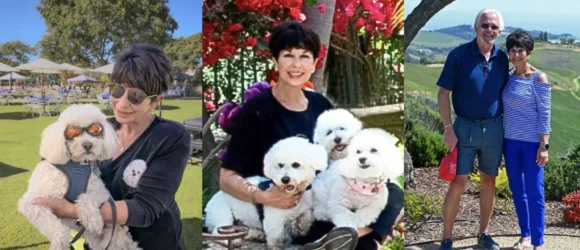
As the founder of Bichon FurKids, Marti transformed compassion into action on an extraordinary scale. What began as a mission to help a beloved breed has grown into a powerful, life-saving organization that has rescued more than 4,000 dogs—Bichons, Havanese, poodles, maltipoos, and mixes—giving each one not just shelter, but a second chance at life.
“Every dog deserves not just a home—but a loving, forever home,” Marti said.
At the heart of Bichon FurKids is a simple but profound belief: that our animal companions deserve to be cherished, protected, and loved. Marti and her dedicated team of volunteers live this philosophy every day. They step in when dogs can no longer remain with their families—whether due to illness, hardship, or circumstance—and ensure these vulnerable animals are placed in safe, nurturing foster homes before finding their forever families.
“Rescue isn’t just about saving lives—it’s about restoring trust, confidence, and dignity.”
The work is demanding. It requires patience, resilience, and an unshakable commitment to creatures who cannot speak for themselves. Yet Marti approaches it with the same discipline and insight that defined her corporate career—bringing structure, strategy, and an abundance of empathy to every rescue.
Her personal journey reflects that same resilience and openness. After the loss of her husband a few years ago, Marti found an unexpected new chapter through the game of bridge. At Oasis, she met fellow player Ruprecht von Buttlar, who had also lost his spouse. What began as a shared understanding grew into companionship, and today the happy couple lives in Poway, surrounded by a lively household of four rescue dogs—Marti’s beloved trio, Kimmie, Quincy, and Kenzie, along with Ruprecht’s dog, Toby. Together, they form a devoted pack, bound as much by affection as by second chances.
Marti’s life has also been shaped by family and a global perspective. Her two adult children live overseas—her daughter divides her time between Portugal and Holland, while her son calls Japan home. She is a proud grandmother to two granddaughters—one currently at UC Berkeley, the other embarking on college tours as this story is written.
Her connection to place has evolved over time. Her father’s final Air Force assignment brought her parents to Oahu, where they lived for 17 years and where Marti spent many cherished vacations and summers. In 1979, a corporate relocation brought her to Southern California—a place she has called home ever since.
Those who know Marti often remark on her rare duality: a results-driven executive paired with a deeply compassionate advocate. It is precisely this combination that has allowed Bichon FurKids not only to succeed, but to flourish—as both a rescue organization and a community united by purpose. ♣
Harriet Rossetto: Discovering the Second Half of Life
- At April 13, 2026
- By Jessica
- In Interests
- 0
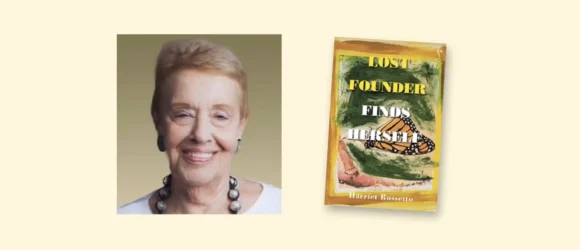
Published in D22 Connection, April 2026
The founder of a renowned recovery center reflects on identity, aging, and the unexpected wisdom found at the bridge table.
By Jessica Dee Rohm
Four afternoons a week, Harriet Rossetto takes her seat at a bridge table at the Duncan Bridge Center on Cook St. in Palm Desert across from her husband, Rabbi Mark Borovitz. The cards are ready, Bridgemates loaded with ACBL numbers, and the quiet murmur of bidding drifts across the room. Twenty-four boards await. Some days the cards cooperate. Other days they most certainly do not.
Like many bridge players, Harriet rides the familiar emotional roller coaster of the game—the thrill of a well-played hand, the frustration of a missed signal, the occasional raised eyebrow from a competitive opponent.
But for Harriet, bridge has become more than a pastime. It has become a quiet classroom for the second half of life. And the Duncan Bridge Center has become more than a place to play cards. It has become her community.
That realization might surprise those who know her from the remarkable first chapter of her career. For decades, Harriet Rossetto was known by a title that defined both her work and her identity: Founder.
A Calling That Changed Thousands of Lives
Harriet Rossetto received her Master’s degree in Social Work from the University of Minnesota and spent fifteen years working in the field before an unexpected opportunity altered the course of her life. One day she noticed a small advertisement seeking “a person of Jewish background and culture to help incarcerated Jewish offenders.”
Harriet answered the call.
Beginning in 1984, she entered a largely unspoken and uncomfortable arena—working with Jewish men and women in prison struggling with addiction and criminal behavior. At the time, there was widespread denial within the community that “nice Jewish men and women” could suffer from addiction or become involved in crime.
Harriet knew otherwise.
She also knew that simply incarcerating these individuals did little to heal them or protect society from repeated cycles of addiction and recidivism. Frustrated by the lack of meaningful resources to help people rebuild their lives after prison, she began to envision something radically different.
That vision became Beit T’Shuvah —“The House of Returns.”
A Pioneer in Recovery
Harriet believed that addiction was not simply a behavioral problem but a malady of the soul requiring spiritual healing. Guided by that conviction, she created the first residential recovery program in the country to integrate Judaism, the Alcoholics Anonymous Twelve Step program, and psychotherapy into a single treatment model.
What began as a bold experiment grew into a groundbreaking institution.
Over more than thirty-five years, Harriet built Beit T’Shuvah into a world-recognized recovery center, mentoring hundreds of therapists and counselors along the way. She supervised promising graduate students completing their clinical training for MFT and MSW degrees, helping shape the next generation of addiction professionals.
Her philosophy has always been simple and direct: “We are either in recovery or we are in denial.”
Under her leadership, Beit T’Shuvah became not just a treatment center but a community—one dedicated to helping people rediscover dignity, responsibility, and purpose.
Her work has earned national recognition. Harriet participated in President George W. Bush’s Faith and Recovery roundtables and received the Advocates for Action Award from President Barack Obama for her contributions to recovery and community healing.
For more than three decades, she served as the guiding spirit of Beit T’Shuvah, working side by side with her husband, Rabbi Mark Borovitz, whose own journey of recovery became central to the organization’s spiritual mission.
Together they have lived, worked, and built a life devoted to helping thousands of individuals and families find their way out of addiction.
From Role to Soul
After decades of leadership, Harriet eventually stepped away from the role that had defined so much of her life.
The transition was both abrupt and deeply personal. The nameplate on her office door came down. The parking space that had long been hers belonged to someone else. The healer who had guided so many through recovery now faced a question familiar to many people entering life’s later chapters: Who am I now?
Leaving behind a professional identity after decades of meaningful work can feel profoundly disorienting. The structure and recognition that once shaped daily life disappear, and the future can seem uncertain.
Harriet responded the way many lifelong learners do—she turned to books.
Determined not simply to grow older but to grow wiser, she began reading widely about aging, elderhood, and the search for meaning later in life. Soon her bookcase filled with titles exploring this new terrain. Today, two shelves are devoted to what she jokingly calls her “self-prescribed curriculum on aging.”
“What I discovered,” Harriet says, “is that aging wisely is something we have to study and practice—just like anything else.”
One of her most meaningful insights came from Connie Zweig’s book The Inner Work of Age. Its subtitle —“Shifting from Role to Soul”—immediately resonated.
For much of our lives, identity is built around roles—parent, professional, leader, spouse. Success is measured by titles and accomplishments.
But the second half of life asks a different question.
Instead of asking “What have I achieved?” we begin asking “What truly gives my life meaning?”
“With time,” Harriet explains, “the question changes from “How do you see me?” to “How do I see myself?”
An Intellectual Nomad
During this period of reflection, a phrase shared by a writer friend struck Harriet with unusual clarity: intellectual nomad.
For much of her life she had felt like someone who wandered across disciplines and ideas without fitting neatly into any single category. The phrase reframed that experience as a strength rather than a limitation.
To Harriet, “intellectual nomad” describes a curious mind that moves freely across information landscapes, connecting ideas that might otherwise remain unrelated.
For the first time, she felt she had found language that truly captured her nature.
Lessons from the Bridge Table
Perhaps the most surprising classroom for Harriet’s reflections has become the bridge table.
Four afternoons each week she and her husband sit down to play duplicate bridge. Like many players, they have experienced the full emotional range the game can bring. Some days they finish near the top of the field; other days they land firmly at the bottom.
“Bridge,” Harriet says with a smile, “has a way of exposing human nature in the bright fluorescent light of a community room—where triumph, frustration, and the occasional raised eyebrow all play out over thirteen cards.”
But bridge has a built-in lesson: once the game begins, you cannot simply walk away. “Bridge forces you to forgive yourself—and your partner,” she says. “You can’t storm off. You have to keep playing.”
In the bridge world, the ultimate goal is becoming a Life Master, earned through years of tournament play. Harriet has come to believe the deeper challenge lies elsewhere. Rather than mastering the game, she is more interested in mastering the emotions and reactions that the game, and life inevitably, bring.
A Different Kind of Mastery
Today Harriet’s life has taken on a quieter rhythm. The urgency of her Founder years has given way to reflection, reading, writing, and exploration. She is the author of the memoir Sacred Housekeeping and continues to reflect on the lessons of recovery, leadership, and personal transformation. Her second book, Lost Founder Finds Herself, is available at Amazon.com.
The wilderness she entered after leaving her Founder identity, she has discovered, is not empty at all. It is a spacious landscape for wandering minds — a place where the healer and the wounded, the teacher and the student, the winner and the last-place bridge player can all coexist.
And so, four afternoons a week, Harriet Rossetto once again takes her seat at the bridge table. The cards are shuffled, the bidding begins, and another twenty-four boards lie ahead.
Some days she wins. Some days she does not. But these days, she knows that mastering the game was never really the point. Learning how to live the second half of life with curiosity, humility, and grace—that is the real mastery. ♣
Sandra Seastedt: Listening Across Borders
- At March 14, 2026
- By Jessica
- In Interests
- 0
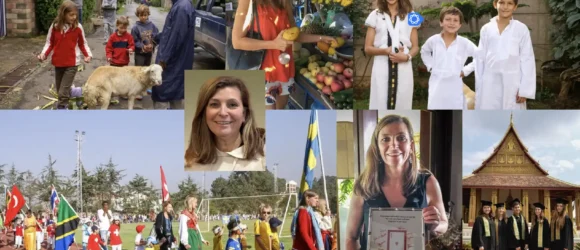
Published in D22 Connection, March 2026
By Jessica Dee Rohm
Sandra Seastedt was born in Switzerland, the daughter of a Swissair flight attendant — a detail that feels, in retrospect, less like trivia and more like destiny.
“Travel was just normal in our house,” Sandra says. “Airports didn’t feel exotic. They felt familiar.”
As a young woman, she came to the United States one summer simply to learn English. She never left. What began as a short stay turned into a life rooted in the American Dream, shaped by curiosity, adaptability, and an instinct to lean toward the unfamiliar rather than away from it.
That instinct would later define both her professional path and her family’s extraordinary global journey.
Sandra is a Licensed Marriage and Family Therapist whose career has unfolded across continents, cultures, and crises. Her international life expanded alongside the public-health work of her husband, Eric Seastedt, whose leadership roles with NGO Population Services International took their family to Ethiopia, the Dominican Republic, Laos, and beyond. While Eric focused on strengthening health systems at scale, Sandra worked at the most human level — helping individuals, children, couples, and families navigate trauma, transition, and profound cultural change.
In Addis Ababa, Ethiopia, Sandra maintained a private therapy practice serving international schools, embassies, the United Nations, and European delegations. Daily life required constant recalibration.
“We had to boil the milk for our kids,” she recalls. “There was no pasteurization. You didn’t think twice about it — you just did what you had to do.”
Those moments of adaptation weren’t abstract lessons; they were lived experiences, shared with her children — Hana, Dario, and Kai — who grew up seeing the world not as something fixed, but as something to be learned anew in each place.
Sandra remembers one moment in particular that still tugs at her heart strings.
“I gave a child a banana once in Ethiopia,” she says, “and he just ate it — peel and all. It stopped me cold. It was such a reminder that my assumptions weren’t universal.”
That awareness — the humility to observe before judging — became central to both her parenting and her clinical work. Sandra specialized in supporting families dealing with adjustment disorders, anxiety, trauma, neurodevelopmental challenges, and the layered stress that often accompanies international assignments. She consulted with schools to build positive learning environments, led social-skills groups for children, and became a trusted referral therapist for embassies, NGOs, and international clinics.
In Vientiane, Laos, she expanded her leadership beyond the therapy room, serving as Board Chair of the Vientiane International School. The role reflected her belief that mental health is inseparable from community — and that strong institutions matter, especially for children living between worlds.
Through it all, Sandra’s children absorbed a global education few classrooms could replicate.
“They had great fodder for college essays,” Sandra says with a smile. “Not everyone can write about boiling milk, learning three currencies, or realizing bananas can be eaten in more than one way.”
Eventually, the family returned to San Diego, where Sandra now maintains a private practice, bringing decades of international experience into her work with individuals and families. Her fluency in German, English, and Spanish — and her deep cultural literacy — allow her to meet clients where they are, whether they’re navigating grief, family conflict, anxiety, or the quiet disorientation of major life transitions.
And then there is bridge.
Like many who are drawn to the game, Sandra appreciates its logic and discipline. But what truly resonates is the partnership: the unspoken communication, the necessity of trust, the patience required when things don’t go as planned.
After a life spent crossing borders — geographic, emotional, and cultural — Sandra Seastedt understands better than most that connection is both an art and a practice. At the bridge table and beyond, she brings the same steady presence: attentive, thoughtful, and deeply aware that the most important things are often conveyed without words. ♣
Rosemarie “Rose” Will: Where There’s a Will, There’s a Way
- At January 13, 2026
- By Jessica
- In Interests
- 0

Published in D22 Connection, January 2026
By Jessica Dee Rohm
In 2011, Rose and Chris Will lost their son, Matthew, to leukemia. He was just twenty years old—young, vibrant, and filled with promise. The kind of loss they experienced is the kind that divides life into two parts: before and after.
“We couldn’t save our son,” Rose says quietly. “But we wanted to find a way to help save others.”
Out of that resolve came Matthew’s Vineyard, a living tribute rooted in love, memory, and purpose. On five acres the Wills own in the rolling hills of San Luis Obispo, they planted vines not simply to make wine, but to create something that could continue Matthew’s legacy far beyond his lifetime.
The vineyard released its first vintages in 2016 and now produces approximately 4,000 bottles each year, specializing in exceptional Chardonnay and Pinot Noir. But for Rose and Chris, the wine is never just wine.
“Every bottle tells Matthew’s story,” Rose says. “And every bottle supports hope.”
Each October, Matthew’s Vineyard hosts a beloved harvest celebration, welcoming roughly 150 friends, supporters, and neighbors. The annual pick-up party is part reunion, part remembrance, and part joyful celebration of community. It is a moment when grief and gratitude exist side by side—proof that sorrow, when carried with love, can become something beautiful.
Proceeds from the vineyard are donated each year to Stanford University to support leukemia research through the Matthew Will Leukemia Research Fund II, ensuring that Matthew’s life continues to make a difference in the lives of countless others.
You can learn more at: matthewsvineyard.com(opens in new tab)
Finding Joy Again
Rose and Chris first met at St. Mary’s College, where Chris studied theology and philosophy, originally intended for the priesthood. Rose majored in liberal studies. Together they built a life centered on family, faith, and service, raising two daughters - Elizabeth and Abigail - who would later give them four grandchildren—with a fifth arriving this July. One grandson proudly bears Matthew’s name, a reminder that his spirit continues in the next generation.
After Matthew’s passing, joy did not return easily. Grief can isolate, numb, and quiet even the most vibrant soul. For Rose, healing came from an unexpected place: the game of bridge. Rose healed and excelled, becoming a bronze life master in twelve short years.
“Bridge helped me find my way back to life,” she says. “It gave me focus, friendship, and laughter when everything else felt so heavy. It reminded me that joy was still possible.”
In many ways, Matthew’s Vineyard mirrors that same journey—from heartbreak to connection, from loss to meaning. It stands as proof that love never disappears; it simply finds new ways to express itself.
Through vineyards and vintages, science and generosity, Rose and Chris Will have transformed tragedy into a legacy of hope—one that continues to save lives and touch hearts. ♣
Meet Our New Regional Director… CORNELIA GOULD
- At December 15, 2025
- By Jessica
- In Interests
- 0
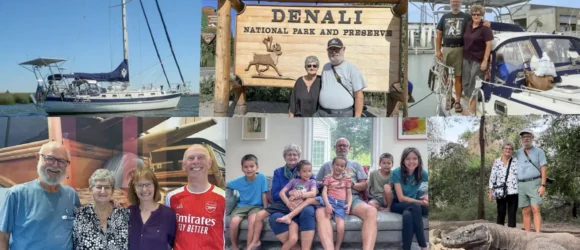
Published in D22 Connection, December 2025
Representing Districts 22 and 23 on the ACBL National Board
By Jessica Dee Rohm
Some people measure their lives in years; Cornelia Gould measures hers in horizons—legal, nautical, and now, bridge regional director. From Pasadena to the Pacific and beyond, her story is one of curiosity, courage, and community.
Early Roots and Global Perspectives
Born and raised in Pasadena, California, Cornelia showed an early appetite for exploration and learning. In high school, she spent a year as an AFS exchange student in Johannesburg, South Africa—an experience that opened her eyes to a world far beyond her California roots.
After returning home, Cornelia attended UC Davis and graduated from Pitzer College with a degree in Political Science. Her intellectual curiosity and commitment to rigorous thinking led her to law school, where she earned her Juris Doctor and became a member of the California Bar. Never one to stop learning, she also earned a master’s degree in Taxation.
A Career in Law and a Leap to Freedom
Cornelia spent over two decades practicing as an ERISA attorney—specializing in retirement plan law—with several prominent San Francisco firms. From 1977 through 1998, she built a respected career advising on complex financial and regulatory matters. But in 1998, Cornelia decided it was time for a different kind of challenge: one that traded legal briefs for blue water and boardrooms for the open sea.
Five Years Under Sail
When her husband, Ed Gould, retired in 2007, the couple embarked on an extraordinary new chapter—literally casting off into the unknown. They moved onto a sailboat, and spent the next five years exploring the world’s oceans.
Their voyage began along the Mexican and Central American coasts before they crossed the vast Pacific in 2010. Starting from Ecuador and the Galápagos Islands, they navigated to the Marquesas, Tuamotus, the Societies, Cook Islands, American Samoa, Samoa, Tonga, and finally New Zealand. The following years took them to Fiji, Vanuatu, and New Caledonia before their odyssey ended in Brisbane, Australia, where they sold their boat in 2012.
“It was the adventure of a lifetime,” Cornelia recalls. “Every day brought a new horizon—sometimes calm, sometimes challenging—but always unforgettable."
From the High Seas to the Bridge Table
After returning to land, the Goulds settled first in Walnut Creek, then Incline Village, Nevada, and now Indian Wells, California. Along the way, they discovered a new shared passion: bridge.
Cornelia and Ed joined the ACBL in 2011, initially while back on shore between voyages. Their real immersion into the bridge world began at Rossmoor in Walnut Creek where they played duplicate for the first time. Then it progressed when they moved to Incline Village, where they became directors and founded the Top of Tahoe Bridge Club, hosting weekly summer games. Their involvement deepened through Unit 465 in Carson City, where Cornelia served on the Board and co-chaired a Sectional Tournament. She was slated to chair the following year’s event—but then COVID-19 hit.
Still, Cornelia’s leadership was undeterred. She was elected as one of her Unit’s representatives to the D21 Board, later serving on its Executive Committee. After moving south in 2024, she transitioned to representing D22 on the ACBL Advisory Council. In 2025, she became a member of both the D22 and Unit 533 Boards, serving as D22’s District Tournament Coordinator and STaC (Sectional Tournament at Clubs) Coordinator, and as Secretary of Unit 533.
Life Today: Balance and Adventure
Cornelia’s calendar may be full of bridge commitments, but her zest for life extends well beyond the card table. She enjoys walking Harley, her yellow lab; playing bocce ball and trivia; staying active with water aerobics; and spending time with family and friends—including Ed, two children and five grandchildren.
Summers are devoted to travel—a well-earned escape from the desert heat of Indian Wells. Cruises are a favorite, especially those featuring ACBL bridge onboard. “We love the combination,” she says. “Traveling the world while playing the game we love—it’s perfect.”
Looking Ahead
Whether navigating complex legal codes, the open sea, or a tricky 3NT contract, Cornelia approaches life with the same qualities: intelligence, persistence, and grace. “There’s always something new to learn,” she says with a smile. “And that’s what keeps life interesting.”
From Pasadena to Papeete, and now from the bridge table to the ACBL boardroom, Cornelia Gould continues to chart her own remarkable course—one defined by curiosity, courage, and connection. ♣
Life Shaped by War, Waves, and Wonder
- At October 10, 2025
- By Jessica
- In Interests
- 0
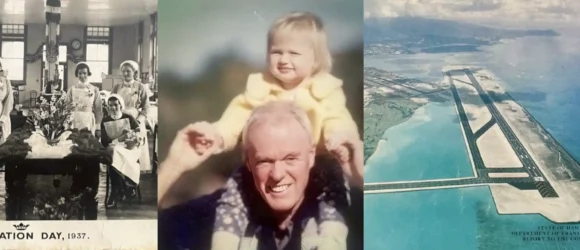
Published in D22 Connection, October 2025
The Story of Ian Collins
By Jessica Dee Rohm
Born in Birmingham, England, in the shadow of World War II, Ian Collins’ earliest memories were shaped by upheaval. As a child evacuee, he and his sister were shuttled between country homes while his father served in the artillery—surviving Dunkirk, fighting across North Africa, Italy, Cyprus, and France—before being seriously wounded in the battle for the Rhine Bridge. At home, rationing meant Ian was always hungry, though his grandmother’s garden and hens provided rare comforts. Nights often meant huddling in a corrugated steel bunker while bombs fell over Birmingham.
“Even as a boy, I learned to live with uncertainty,” Ian recalls. “You didn’t know if your house would be there in the morning, but somehow life carried on.”
Despite disrupted schooling, resilience became his hallmark. He excelled academically, earning awards in mathematics and music, captaining his school chess team, and dabbling in rugby, cricket, and even boxing. A nearby library nurtured his curiosity, and countless hours among its stacks cemented a love of learning. Winning a scholarship to the University of Birmingham, he chose civil engineering, inspired by both mathematics and hands-on experience at construction sites.
Graduate studies took him to Queen’s University in Ontario, where he became fascinated with harbor siltation, beach erosion, and the science of waves. Summers spent on pier construction and at the Delft Hydraulics Laboratory deepened his expertise, and by the time he graduated, Ian was already an emerging authority on coastal engineering. Along the way, he discovered duplicate bridge, immersing himself in the ACOL system (a British bidding system developed in London in the 1930s) from the ground up
His career spanned continents and decades, fueled by a passion for understanding the power of water. Early projects took him from hydroelectric plants to flood studies in New Orleans after Hurricane Betsy, surf-zone research for the U.S. Navy, and even classified work on underwater nuclear explosions. In Washington, D.C., and later Pasadena, he built a reputation for tackling storm flooding, coastal erosion, and wave impacts on critical infrastructure.
He became part of TetraTech when it was still a fledgling start-up, helping it grow into a global engineering firm. His expertise carried him to projects shaping airports in Honolulu and remote Pacific islands; designing naval bases and LNG terminals in the Middle East; and modeling wave forces for nuclear power plants. Later, at Arctec in Escondido, Ian oversaw towing tanks and wave basins so advanced that Hollywood rented them for blockbuster films like Titanic and True Lies. His work even took him to Beijing, where he negotiated the installation of wave-making technology, celebrating his 50th birthday in the Chinese capital.
“Water is both the most patient and the most relentless force on earth,” Ian says. “My life’s work has been learning how to respect it—and sometimes how to push back.”
Internationally recognized, Ian represented North America on the International Towing Tank Committee, collaborating with leading marine engineers across Europe. Eventually, he co-founded Coastal and Marine Technology, later merged into Scientific Marine Technology and British Maritime Technology. His consulting extended into retirement, supporting ports, oil companies, and universities worldwide.
Yet his life has always been more than engineering. Ian grew up with a close-knit family: one sister, two brothers born after the war, and a youngest brother 17 years his junior—born on the very same date. “I used to joke that I never had a birthday to myself again,” he laughs. His middle brother became a gifted musician, playing violin, guitar, and banjo in a bluegrass band before his untimely passing. His sister went on to lead a hospital’s physical therapy department before retiring, while his youngest brother built a distinguished career with degrees in electrical engineering, law, and an MBA.
Ian is equally proud of his children. His daughter is an oncologist, leading worldwide drug trials for a Coloradobased company and serving on the board of a firm in San Diego. His son, based in Atlanta, followed his passion for art into medical illustration, combining creativity with technology to depict complex surgical procedures and injuries. “He loved art, but medical art pays more!” Ian jokes, noting that his son now heads a team of illustrators while also managing his company’s computer networks.
Through all these chapters—wartime displacement, academic triumphs, global engineering projects, family achievements—Ian’s life reflects resilience, intellect, and a fascination with both human ingenuity and nature’s forces. From bombs falling over Birmingham to wave machines in Beijing, he has lived at the intersection of history and science, hardship and wonder.
Now retired, Ian plays golf three times a week and, in his spare time, pursues his curiosity in subjects such as biochemistry, thermodynamics, geology, and astrophysics. To deepen his understanding, he listens to The Great Courses, a series of lectures by leading science professors.
Looking back, Ian muses: “I was just a boy who loved to read and solve puzzles. The war toughened me, the sea inspired me, and my family grounded me. If I’ve left anything behind, I hope it’s the sense that curiosity and persistence can carry you a very long way.” ♣
Is There Such a Thing as a Bridge Gene?
- At July 10, 2025
- By Jessica
- In Interests
- 0
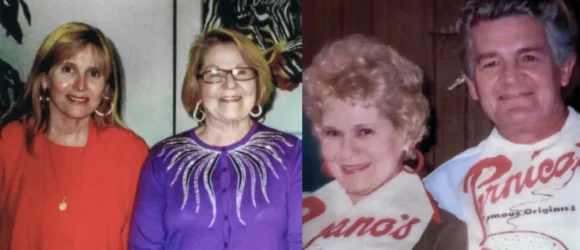
Published in D22 Connection, July 2025
A Conversation with Kris Pernicano
By Jessica Dee Rohm
Jessica: Kris, let’s start at the beginning. When did bridge first come into your life?
Kris: It was 1969. Something big had just happened—something deeper than my alligator bite, and yes, I’ve had one. This one, though, changed the course of my life. My mother, Dorinda West, was a regular at her local bridge club in Orange County. One day, a man named Robleigh Lindvall walked in. He needed a partner, and my mom’s regular partner was ill. They hit it off instantly. “Perfect fit,” doesn’t only apply to bridge hands.
J: That sounds like a turning point.
K: It really was. Not long after, my mom and dad’s marriage ended. Robleigh and my mom, now Dorinda Lindvall, moved us to San Diego, where he ran a major plumbing company—Safeway Plumbing and Heating—with 26 union plumbers. They chose a home in La Jolla for my sister Cheryl and me. But honestly, it felt like just the two of us living there—Robleigh and my mom were always out playing bridge.
J: Did your mom ever try to get you interested in bridge?
K: Oh yes, she’d suggest it often. She said I’d love it. I wasn’t so sure. Sometimes we’d meet up with other bridge families. The parents would go off into one room, lost in their game, while us kids were left to form our own little support group—we called ourselves the “bridge orphans.”
J: That’s a hilarious and endearing name.
K: It stuck. And through the years, I came to appreciate the joy bridge brought my mom and Robleigh. They built lasting friendships—all through bridge. It really was their life, and a good one.
J: What about your own family life?
K: I married a kind, hard-working man named John Pernicano. He ran his dad’s restaurant—Pernicano’s in Pacific Beach—for 60 years. We raised our daughters, Laura and Lisa, in La Jolla.
J: When did you decide to give bridge a try?
K: When Laura and Lisa were at Birdrock Elementary, I took lessons from Ed Layton, one of my mom’s bridge friends, at the Riford Center. He was hilarious and brilliant. He’d say things like, “You need a permission slip from your mom to bid five diamonds or five clubs!” We played once a week with a group of fun women. We didn’t keep score—we played for lottery tickets! That went on for 15 years until one of us moved away.
J: Lottery tickets? Did anyone win? You really made it your own.
K: Yes, but life threw us a curve in 2009. My stepdad Robleigh got cancer. Eventually, he couldn’t leave the house. They lived just four doors away, so I visited every day. The three of us developed a three-player bridge format using a “mystery dummy” hand. Whoever won the bid got to play against the other two. We did this for hours each day—it actually worked surprisingly well.
J: That’s a beautiful memory. Was there a turning point when you re-entered the bridge community?
K: Yes, that same year, a national bridge tournament came to town. My mom told me I had to play. I protested, “Who would I play with? My friends don’t play anymore!” She just said, “Show up.” So I did. They found me a partner in the novice room—Betty Black. It was my first time using a bidding box, and we did well.
J: Did your mom find out how you did?
K: Oh, she did! I walked into one of the advanced rooms to find her, and she and her partner, Alice Lane, started giggling. They’d heard my name on the intercom among the winners.
J: What happened after that?
K: Life happened—family needs, responsibilities. Bridge went on hold. Fast forward to 2023: my mom’s health declined. Her vision failed, so she couldn’t play bridge anymore. Laura and I visited daily. We played “Hand and Foot” instead—it was easier on her eyes. But she missed bridge terribly. She kept telling me to go back and become a “Life Master.”
J: And did you listen?
K: I tried. I could barely remember the rules. I found Scott Farr’s classes at the La Jolla Community Center. I joined his intermediate group. He was fantastic and even threw in some stand-up comedy. Then I discovered the beginner Duplicate Game at Redwood Bridge Club in Balboa Park. It was perfect—a great entry point for duplicate bridge. David Walters runs it and is incredibly supportive. If you don’t have a partner, he’ll find one for you.
J: What kept you coming back?
K: Duplicate bridge is fascinating. You get to analyze hands afterward, think about how each could have been played better. Scott even invited me to play at La Jolla Cove Bridge Club. I was nervous. He bid “1 No Trump,” and I passed like a deer in headlights. He still made overtricks. Later, he paired me with someone named Jessica—he thought we’d be a great team. We are.
(Yes, readers, that Jessica and I are one and the same. And Kris and I are a perfect fit.)
J: Was your mom still able to follow your progress?
K: Yes. Every visit, I shared my bridge stories. She lit up with each one. One time, Laura and I brought our pet lizard Lizzy to see her. My mom smiled and said, “I feel sorry for Lizzy—she’s probably going to become a bridge orphan.”
J: When did your mom pass?
K: April 6, 2024. She was full of love, grace, and wisdom. She always said, “It is nice to be important, but it is important to be nice.” I miss her every day. Whenever I win I suspect it is her hand guiding me.
J: Any full-circle moments since then?
K: I recently bumped into one of the original bridge orphans. We had a laugh. I told her I’m now playing bridge seriously. She said, “Oh no, you’ve joined the dark side. I’ll pray for you!”
J: That’s perfect.
K: I told her, “Our parents knew what they were doing. They found a great thing.” And you know what? My mom was right. I love bridge. I always will. She passed the torch to me—and I just hope I don’t drop it. ♣